Water heater repair • Serving Mesa, AZ

Water Heater Repair in Mesa, AZ.

Call to check availability for water heater repair in your Mesa ZIP code.

CALL NOW: +1 877 364 0435
  • Help for leaking tanks and lost hot water
  • Ask about service for your gas or electric unit
  • You decide whether to proceed
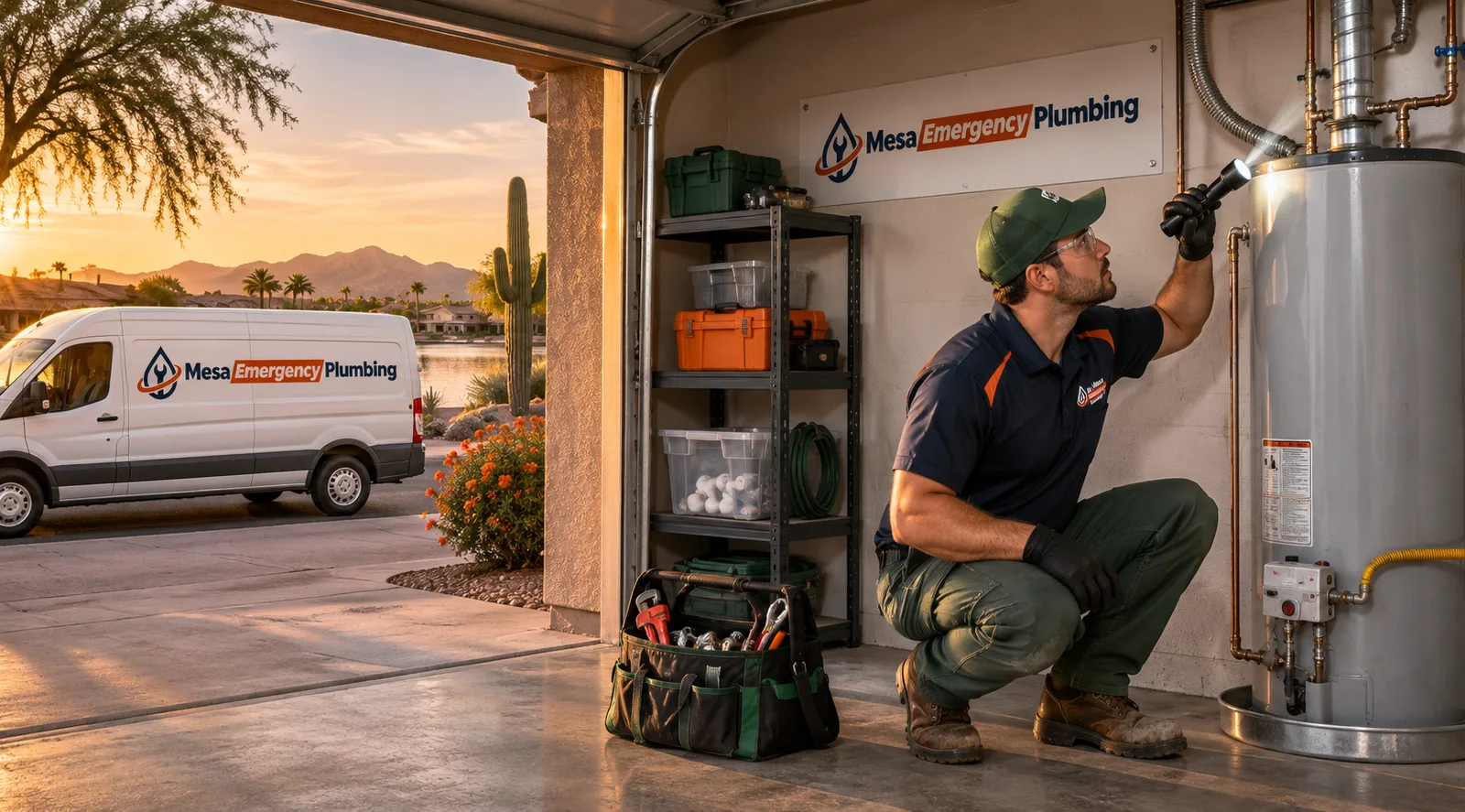
Contractor examining water connections on a residential tank water heater in an Arizona garage with a flashlight.

Water Heater Repair in Mesa, AZ: Find the Cause First

Water heater repair in Mesa, AZ starts with identifying why the unit has stopped delivering reliable hot water. A puddle near the tank may come from a supply connection, drain valve, or the tank itself. Water that turns cold halfway through a shower may point to a failed electric element, a damaged dip tube, or demand that exceeds the tank's capacity. Those problems need different repairs.

A contractor should check the leak source, energy supply, temperature controls, and condition of the tank before recommending work. For gas units, that includes the ignition system and venting. For electric units, it includes testing elements and thermostats with power isolated appropriately. Replacing parts based only on the symptom can leave the underlying problem unresolved.

Mineral buildup matters in the desert Southwest, where hard water can leave deposits inside storage tanks and on heating elements. Sediment can contribute to rumbling and reduced heat transfer, but noise alone does not establish whether a tank needs replacement. The contractor can assess its condition and maintenance history.

For an active plumbing problem, you can check availability with emergency plumber companies serving the Mesa area and, if a plumber is available, discuss your water heater symptoms and service needs.

Mesa Emergency Plumbing is a referral service. The contractor evaluates the equipment, provides the quote, and performs any work you choose to authorize.

Common Repairs and a Direct Way to Arrange Them

Leaking water heater repair

A contractor traces moisture to its source before deciding what can be repaired. Threaded fittings, supply connectors, and drain valves may be repairable. A leaking tank shell generally calls for replacement rather than a patch.

Gas water heater repair in Mesa

A pilot that will not stay lit can involve the flame-sensing device, gas control, or combustion air supply. The contractor checks the ignition sequence and vent condition rather than assuming every ignition failure needs the same part.

Electric water heater repair in Mesa

An electric tank may lose all hot water or heat only part of its capacity when an element or thermostat fails. Electrical testing helps distinguish a failed component from a supply-circuit problem.

Temperature and recovery problems

Uneven temperatures can involve sediment, controls, a mixing valve, or a damaged dip tube. The contractor considers whether the problem affects every fixture and whether hot water returns after the tank has time to recover.

One conversation with the contractor

If a plumber is available, ask whether they service your water heater type and model. Describe any error codes, unusual noises, or changes in hot water so they can explain what an assessment would involve.

You decide whether to proceed

The contractor explains the proposed repair and gives you the quote. Ask which component failed, what the work includes, and whether the tank's condition makes repair sensible before authorizing anything.

How the Call and Repair Process Work

  1. 01

    Check local availability

    Have your property ZIP code ready when you call. If a plumber is available, describe the issue and tell them whether your water heater is gas or electric.

  2. 02

    Arrange an assessment

    The contractor confirms scheduling and access requirements with you. During the assessment, the unit's data label, fuel type, visible plumbing, and symptoms help guide the checks. Garage installations also need clear access to the controls and connections.

  3. 03

    Review the findings and proposed work

    The contractor explains whether the fault is a serviceable component or deterioration of the tank. Ask for the proposed scope, the quote, and any applicable warranty terms. You choose whether to approve the repair or discuss replacement.

  4. 04

    Repair and check operation

    For authorized work, the contractor isolates the appropriate water and energy supplies, completes the repair, and restores operation. Checks should address the repaired connection or component, temperature control, and safe operation. A drained tank must be filled before electric elements are energized.

A leaking tank and a failed heating element need different decisions. Note where moisture appears, when hot water runs out, and the unit's approximate age to help a plumber plan the right checks.

CALL NOW: +1 877 364 0435

Details That Matter During Water Heater Repair

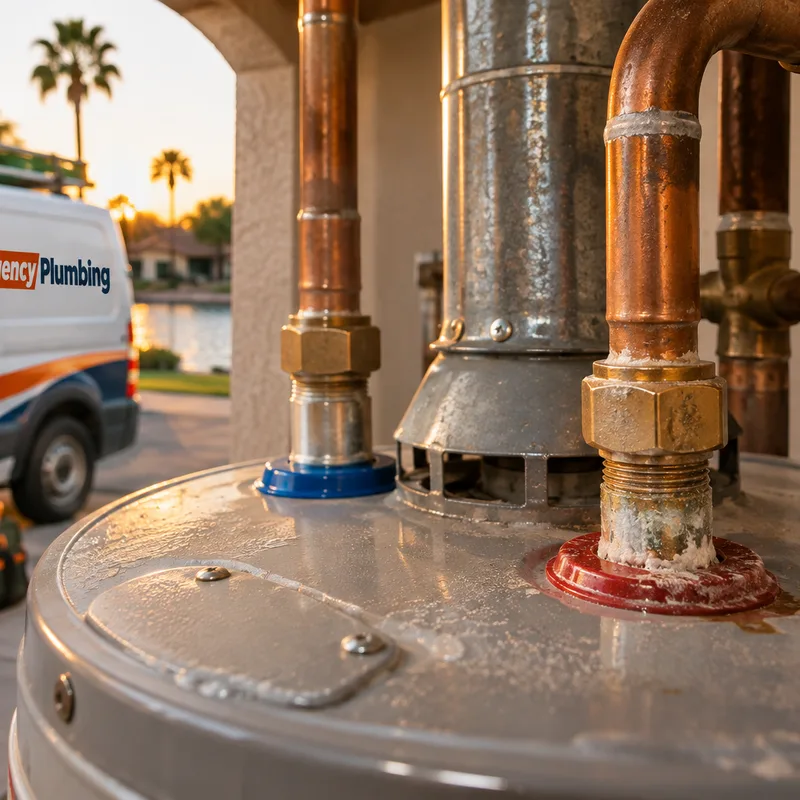
Top-mounted hot and cold water heater connections with mineral deposits around one fitting.
Moisture at a supply fitting does not necessarily mean the tank shell has failed.
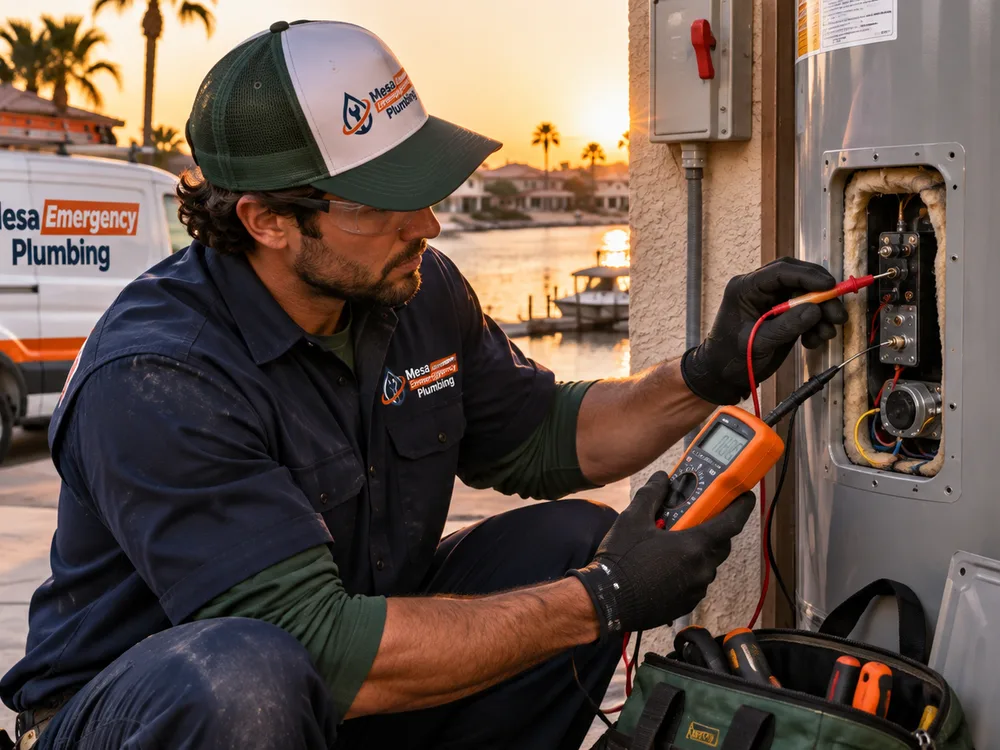
Contractor using a multimeter to test an electric water heater with power isolated and the access cover removed.
Component testing helps separate heating-element faults from thermostat or electrical-supply problems.

Questions Before Arranging Water Heater Repair

What should I do if water is spreading around the heater?

Keep clear of standing water near electrical equipment and arrange a contractor assessment. If you can safely reach and identify the heater's cold-water shutoff, closing it can limit additional water entering the tank. Avoid touching wet electrical controls. If you smell gas, leave the building and contact the gas utility or emergency responders from a safe location.

Can a temperature-and-pressure relief valve simply be capped if it drips?

A temperature-and-pressure relief valve must never be capped or plugged. It is a safety device, and discharge can indicate excessive pressure, excessive temperature, or a faulty valve. The contractor should investigate the cause, including thermal expansion where relevant, instead of treating the discharge pipe as an ordinary leak.

Should I flush a noisy tank before arranging repair?

Ask the contractor whether flushing is appropriate before opening the drain valve on a troubled tank. Sediment can obstruct drainage, and an older valve may not reseal after use. Flushing can remove loose sediment, but it cannot reverse tank corrosion or repair a failed heating component.

Why is only one shower running cold?

A problem limited to one shower may be in its mixing cartridge rather than the water heater. If other fixtures still deliver normal hot water, tell the contractor which fixture is affected. Comparing fixture behavior helps avoid unnecessary work on a functioning heater.

What should I ask a water heater repair company in Mesa about replacement?

Ask why replacement is recommended and whether the existing tank has a confirmed structural leak. Age, repeated failures, and parts availability can also affect the decision. If replacement is proposed, ask the contractor about capacity, fuel type, venting compatibility, and any applicable City of Mesa permit requirements before authorizing the work.

Does a tankless water heater need a different repair approach?

Tankless units require diagnosis suited to their flow sensors, heat exchangers, controls, and error codes. Mineral scale can also affect operation. Tell the contractor that the unit is tankless and provide its make and model if available, so you can confirm whether they handle that equipment.

Get a Clear Next Step for Your Water Heater

Whether the tank is leaking or the hot water keeps running out, ask about an assessment before choosing a repair. If service is available, confirm scheduling, any assessment fee, and how the plumber will explain repair or replacement options before you authorize work.

CALL NOW: +1 877 364 0435