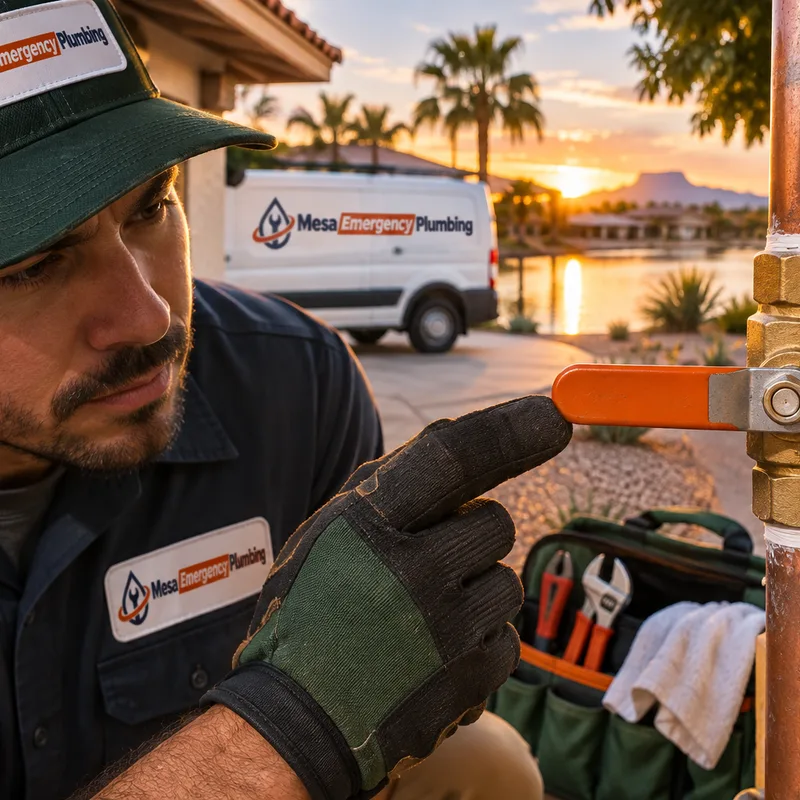
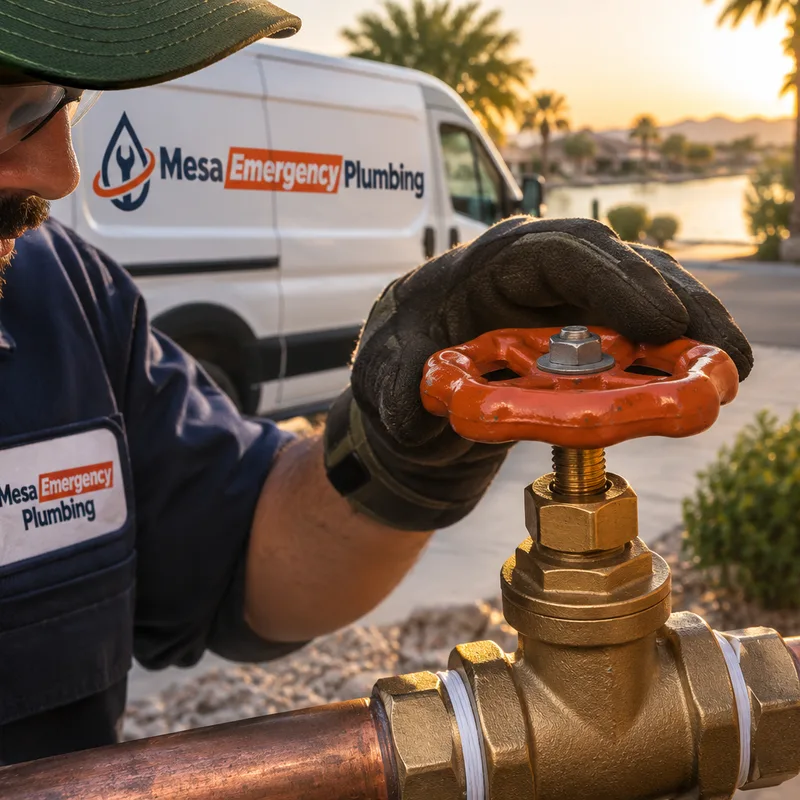
If you are asking, 'how do I shut off the water to my house,' start with the homeowner-operated main shutoff valve. A quarter-turn ball valve is closed when its handle is perpendicular to the pipe. A round-handled gate valve generally closes clockwise. Turn it gently by hand and stop if it resists, leaks, or looks badly corroded. Forcing an old valve can break it and make the leak worse.
Look where the water supply enters the house. In the Mesa area, that may be an exterior wall, a garage, or an accessible enclosure near the front of the property. Layouts differ, so do not assume a valve beside an irrigation assembly controls the house. Trace visible piping where practical, and distinguish the domestic supply from irrigation and fire-sprinkler piping. Leave fire-sprinkler controls alone.
For a leak at one toilet or faucet, the fixture's individual stop valve may isolate it while keeping water available elsewhere in the house. Close the main if water is escaping from a supply pipe, the source is uncertain, or the fixture valve fails to stop the flow. Stay out of standing water near outlets, appliances, or electrical equipment. A wet electrical panel is not safe to approach.
After closing the house main, open a cold-water faucet at a safe sink to relieve pressure. Flow should diminish as residual water drains. Continued steady flow can mean the valve is not closing fully or that it is not the correct valve. A main shutoff stops incoming water; it does not remove water already in pipes or a storage tank.
Call to check availability for local emergency plumber contractors across the Mesa area who handle leaking supply pipes and shutoff problems.
If a contractor is available, discuss the work directly and decide whether to proceed. If the homeowner-operated valve cannot stop the water, ask about the next practical step. For utility-owned equipment, contact the water provider shown on your bill rather than operating unfamiliar meter valves.